Private Travel Planning

Plan the journey around the person taking it.

A journey is experienced through its transitions as well as its destinations. Pathfinder helps individuals, families and their authorized travel teams understand the functional demands of the full sequence. Agreed written priorities give your adviser and relevant providers specific preparation questions to resolve before departure, with your routines, energy, assistance preferences and independence at the center.

When a whole-journey view is useful

You, an authorized family member or representative can commission planning when a trip involves several legs, unfamiliar settings, mobility equipment or coordinated assistance. A travel adviser may introduce Pathfinder with your agreement while arrangements are still being considered.

This perspective can also serve healthy travelers who want a demanding itinerary to respect their preferred rhythm. Changing needs, fatigue or equipment requirements add particular questions, but the starting point remains how you want to experience the journey.

What you and your travel team receive

We agree the itinerary, scope, recipients and timing. Within that scope, functional assessment leads to organized written observations, preparation priorities and questions covering relevant transitions, equipment continuity, rest and assistance.

Your travel adviser can use the information when discussing available arrangements. Transportation, aviation, marine and hospitality providers receive the detail relevant to their part of preparation, by agreement. The benefit is a clearer handoff: your preferences have practical meaning for the people considering the next stage. Providers confirm what they can accommodate.

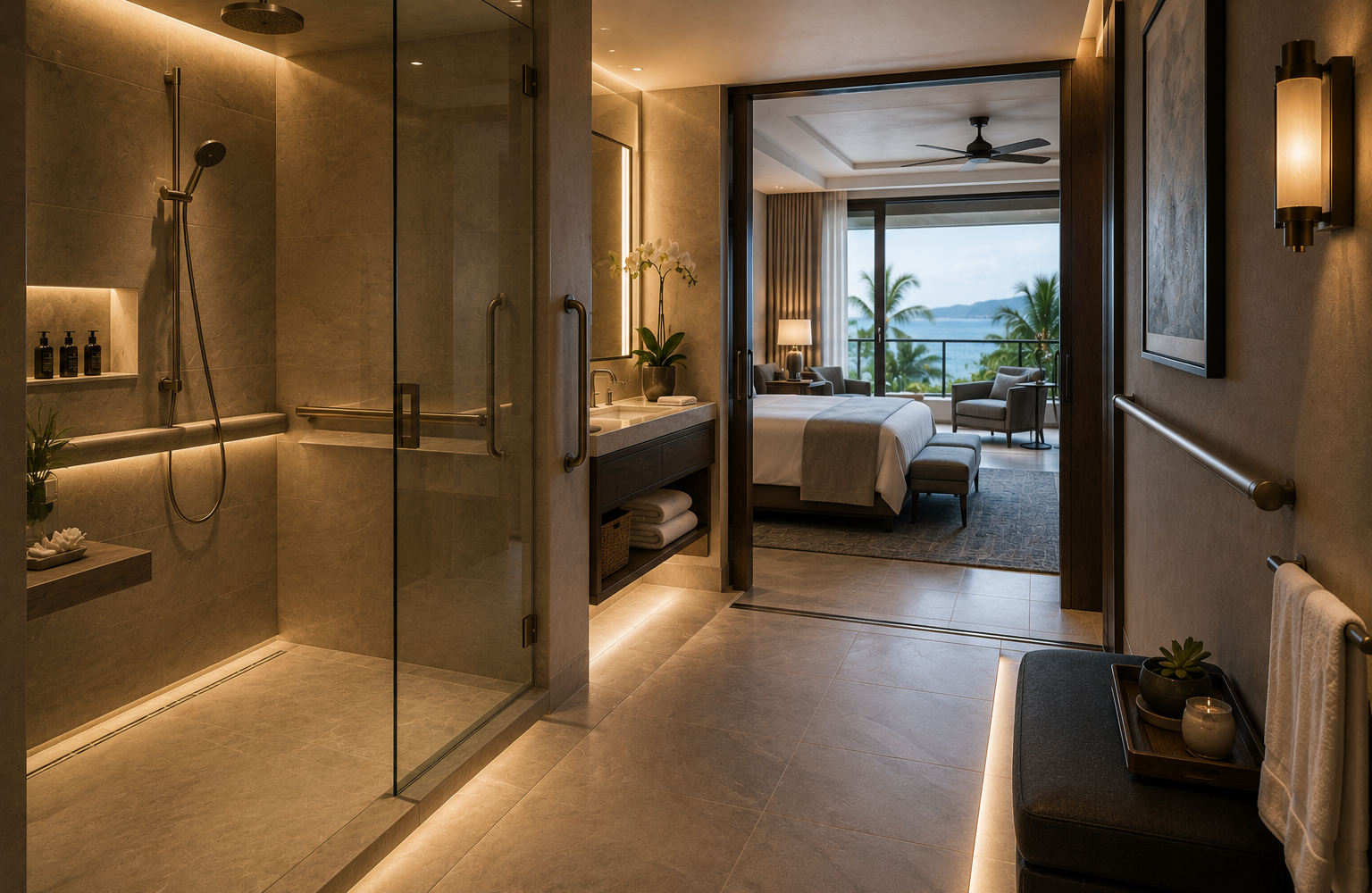
Private villa arrival pathway showing a refined transition between outdoor and indoor spaces

Occupational therapy-informed planning considers how one stage affects the next. Relevant exploration may connect:

Movement
Transfers, walking, reach, hand use and endurance across the journey.
Sensation
Light, sound, motion and unfamiliar surroundings as the person experiences them.
Attention
Following directions, managing belongings and conversing during a transition.
Routine and meaning
Familiar rituals, rest, privacy, personal pace and preferred assistance.

An illustrative example: arrival after a long flight

Activity
A traveler moves from aircraft to vehicle and then into a hotel suite.
Human insight
Accumulated effort, unfamiliar directions and conversation can compete for attention; the traveler may prefer a pause before a detailed welcome.
Decision
What arrival sequence and assistance preferences should be discussed before the trip?
Recipient
The adviser receives questions to coordinate with the providers; the ground and hotel teams receive agreed, role-relevant preparation priorities. The traveler can describe the arrival they want, and each provider can confirm the available options.

This is an illustration, not a reported client outcome.

Working with the people you already trust

Pathfinder contributes functional understanding and agreed coordination alongside your adviser, existing support and providers. Travel booking, medical escort, fitness-to-travel decisions and transport operations remain with the appropriate professionals. Information sharing respects your authorization and discretion.

If a separate cabin, yacht or hospitality design question arises, we can discuss a scoped Functional Design Assessment and Brief. That is distinct from travel-planning documentation. Pathfinder's NOETELIER™ perspective informs this design advisory; it is a proprietary professional designation, while Taylor Azua's OTR credential provides the occupational therapy foundation.

Aviation, marine and hospitality questions can each be explored further. Private aviation · Yachts & marine · Hospitality consulting

Common questions

Frequently asked questions

What’s an example of a “transition” Pathfinder would actually look at?
Moving from a private residence to a vehicle, from vehicle to a terminal, and from cabin to destination transportation are each their own transition — a difficulty at one point, like fatigue after a long flight, can directly affect how the next stage goes. Pathfinder examines that full sequence rather than treating each leg as a separate, unrelated booking.
What does a Pathfinder whole-journey plan actually include?
Prioritized observations and organized, written information covering the agreed journey and its relevant transitions — mobility and equipment continuity, rest and fatigue considerations, and caregiver or crew coordination — prepared for the client, family, and the transportation, hospitality, or aviation providers already involved.

Discuss private travel planning

Bring us the journey, its timing and one transition you would like understood more clearly. We will discuss fit and the useful next step.

Discuss private travel planning

Travel planning can also be part of a broader private client engagement. Learn about Private Client Care Navigation & Family Office Advisory